


What Is the Average Lifespan of a Metal Roof?
- timg25
- 17 hours ago
- 6 min read
A metal roof can look much the same at year 10 as it does at year 30, which is why lifespan is one of the first questions property owners ask. If you are wondering what is the average lifespan of a metal roof, the honest answer is this: a well-installed metal roof commonly lasts 30 to 50 years, and in the right conditions it can perform beyond that. The catch is that lifespan depends heavily on the material, the profile, the exposure to salt air, and the quality of the installation.
That matters in Auckland more than it does in many inland areas. Coastal exposure, high UV, wind-driven rain and blocked drainage can shorten a roof's service life fast. A metal roof is durable, but it is not indestructible. If it is the wrong product for the site, or if details like flashings, fixings and penetrations are handled poorly, the roof may age well before its time.
What is the average lifespan of a metal roof in real terms?
For most homes and commercial buildings using modern long-run metal roofing, 30 to 50 years is a realistic working range. That is the broad average people should expect when the roof has been specified properly and installed by an experienced roofing contractor.
At the shorter end of that range, you are usually looking at roofs in harsher environments or roofs with avoidable issues such as poor ventilation, inconsistent maintenance or low-quality workmanship. At the longer end, you will often see roofs on well-drained sites, away from severe marine exposure, with appropriate coatings and regular upkeep.
It is also worth separating appearance from performance. A roof can still be weather-tight even after the finish has faded or the surface shows age. On the other hand, a roof that still looks acceptable from the ground may already have corrosion around fixings, laps or penetrations. Lifespan is not only about when the roof looks old. It is about how long it continues to protect the building properly.
The biggest factors that affect metal roof lifespan
Material choice is a major one. Not all metal roofing is the same, and not every product suits every Auckland site. Steel roofing with the right protective coating is common and cost-effective, but the coating system and the environment around the property make a real difference. In more aggressive coastal zones, higher-spec products may be needed to deliver the service life the owner expects.
Installation quality is just as important as the material itself. A premium product installed badly will not outperform a standard product installed correctly. Roof pitch, sheet lengths, expansion allowance, flashing details, screw placement and sealing around penetrations all matter. This is where many lifespan problems begin. Water does not need a large opening to cause damage. Small detailing faults can lead to corrosion, leaks and substrate deterioration over time.
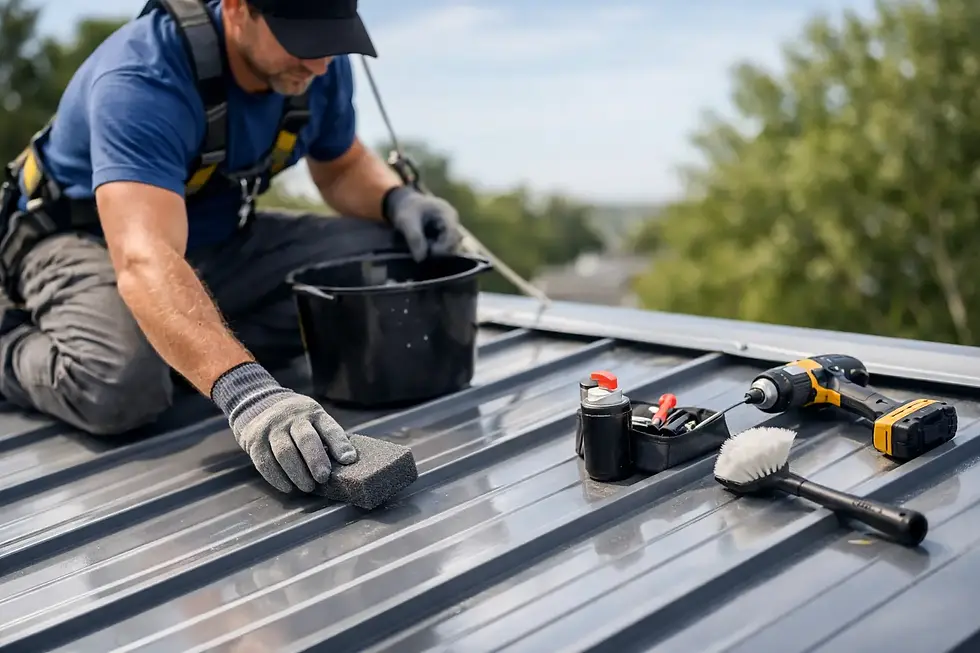
Maintenance also plays a bigger role than many owners realise. Metal roofs are generally low maintenance, not no maintenance. Gutters and valleys need to stay clear. Debris should not be allowed to trap moisture against the roof surface. In marine or industrial environments, washing down the roof can help reduce salt and contaminant build-up. When minor issues are dealt with early, the roof generally lasts longer and performs better.
Site conditions need to be taken seriously too. A roof a few streets back from the coast may age very differently from one directly exposed to salt-laden wind. Nearby trees can scratch finishes, drop debris into drainage paths and keep sections of roof damp for longer. Shaded areas can hold moisture and grime. Even foot traffic from other trades can shorten a roof's life if the sheets are dented, scratched or handled carelessly.
How long different metal roofing situations tend to last
Long-run metal roofing on residential properties often sits in that 30 to 50 year range, but the specifics vary. A standard suburban home in a moderate environment with a correctly installed roof and routine upkeep may comfortably reach the upper half of that range.
A commercial roof may have a different pattern of wear. Larger roof areas, more penetrations, rooftop plant, drainage load and service access can all affect long-term performance. In those cases, the roof covering itself may still be sound, but flashings, fasteners or penetrations may need earlier attention.
Older roofs are another category altogether. If a metal roof was installed decades ago under a different product standard, or has had multiple repair patches from different contractors, predicting lifespan becomes less straightforward. In that case, condition matters more than age alone.
Signs a metal roof is nearing the end of its life
Leaks are the obvious sign, but they are not the first sign in many cases. By the time water appears inside, the roof may already have a history of deterioration around vulnerable points.
Early warning signs include corrosion at fasteners, lifting or loose flashings, recurring leaks in the same location, ponding where water should be draining away, and deterioration around skylights, vents or penetrations. Coating breakdown, chalking and visible rust staining can also point to a roof that is no longer coping with the environment as intended.
There is a difference between a roof that needs repair and a roof that needs replacement. If the issue is localised - for example, a failed flashing, isolated corrosion or damage from an external event - repair may be the right option. If corrosion is widespread, detailing is poor across the whole roof, or the substrate beneath has been affected, replacement is often the more practical and cost-effective path.
Why installation quality changes the answer
When people ask what is the average lifespan of a metal roof, they usually expect the answer to come from the product brochure. In practice, the installer has a major influence on whether the roof reaches that lifespan.
Good roofing work is not just about laying sheets. It is about understanding the building, the exposure level, drainage behaviour, movement, compliance requirements and how all roof components work together. Poor workmanship often shows up in the same places: badly formed flashings, shortcuts around penetrations, incorrect fixings, inconsistent laps and weak water management.
Those defects may not fail straight away. Some roofs leak in the first storm. Others hold on for years before problems become obvious. That delay can create a false sense of security, but the damage is still building. Getting the roof fixed right the first time is usually what determines whether it performs for decades or starts costing money far too early.
Can a metal roof last longer with maintenance?
Yes, but maintenance has to be practical and regular. It is not about constant spending. It is about preventing small issues from becoming structural ones.
A sensible maintenance approach includes clearing gutters and valleys, checking flashings and penetrations, removing debris, and inspecting for coating damage or corrosion. For commercial properties and managed buildings, periodic professional inspections are especially worthwhile because access issues and rooftop services increase the chance of unnoticed damage.
Owners should also be cautious about ad hoc work from unrelated trades. Antenna installers, solar contractors, HVAC technicians and painters can all affect a roof if they do not understand metal roofing. Unsealed penetrations, scratched coatings and careless foot traffic can shorten service life quickly.
When replacement is smarter than repeated repairs
There comes a point where repairing an ageing roof stops being good value. If leaks are recurring, corrosion is widespread, or multiple roof elements are failing together, replacement usually provides better long-term protection than piecemeal fixes.
That does not mean every older roof needs to be stripped immediately. The right call depends on the condition of the sheets, fixings, flashings and supporting structure. An honest assessment should tell you whether the roof still has useful life left or whether ongoing patching is only delaying a larger problem.
This is where specialist advice matters. A contractor focused on metal roofing should be able to explain what the roof needs now, what can wait, and what would be false economy. That direct approach is what practical owners want. No overselling, no guesswork, just clear advice based on condition and exposure.
For Auckland properties, the average lifespan of a metal roof is best thought of as a range, not a promise. With the right product, proper detailing and consistent maintenance, metal roofing offers strong long-term performance. If you want the roof to last as it should, the smartest step is not just choosing metal. It is making sure every part of the job is done with precision from the start.
Comments